






X
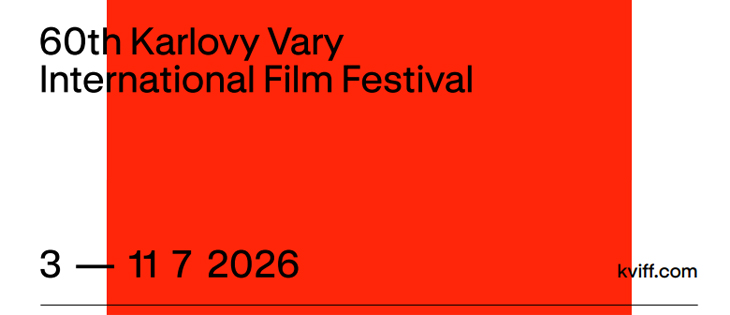
Sixty festival editions spanning the eighty years of its existence serve as a doubly powerful invitation—not only to look back at the rich past of an event established shortly after the end of World War II, but also to examine how closely the current programming team’s view of world cinema’s evolution resonates with the pioneering work of their predecessors, both past and recent.
The nearly forty titles in the main program, all premiering in the spa town at the beginning of July, boast extraordinary geographical diversity. The exclusive presence of Myanmar and Colombia in the Crystal Globe competition naturally connects across a six-decade arc with the progressive decision of one of the festival’s founders and long-time director of programming, A. M. Brousil, to focus intensively on the then-young and undiscovered non-European cinemas.
The filmmakers presenting their work in person to the Karlovy Vary audience this year cross boundaries both spiritually and physically. The fact that the countries of production or filming locations of these projects often differ—even continentally—from the filmmakers‘ countries of origin is far more commonplace today than in the past. One of the defining characteristics of the films in this year’s main program is the directors‘ impressive effort to comprehend the diversity and complexity of the world through firsthand confrontation, and through a relentless search for the relationship between the artistic and the political, the intimate and the societal. The official selection of the jubilee edition offers a dialogue between seasoned veterans of world cinema and first-time directors, fifteen of whom are featured across the Crystal Globe Competition, the Proxima Competition, and the Special Screenings section. This, too, makes Karlovy Vary a place of continuous dialogue between interpreting the present and preserving memory, opening up new visions of the future for both creators and audiences alike.
3 nedelje posle / 3 Weeks After
Director: Miroslav Terzić
Serbia, Bulgaria, 2026, 94 min, World premiere
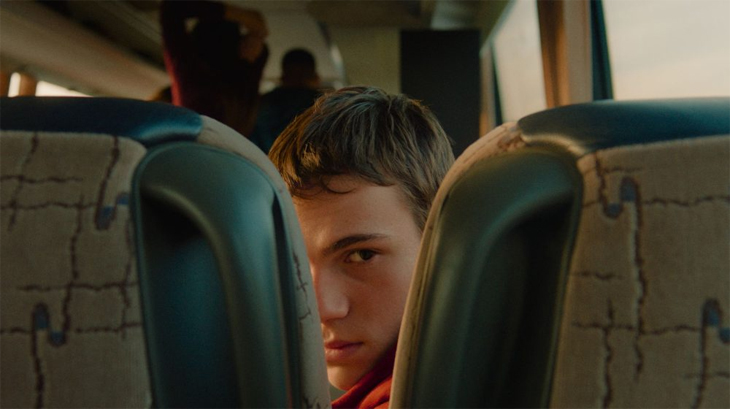
A group of high school students set off for a class trip to Bulgaria. When their bus breaks down, they find themselves stranded in an old hotel near the mountains. The atmosphere grows tense when the quiet and withdrawn Zoza decides to talk about his best friend’s recent suicide. Why did Andrij choose to end his life? And wouldn’t it have been better if Zoza hadn’t brought it up? Like his previous outings, Serbian director Miroslav Terzić’s third film is characterized by an overwhelming, meticulously crafted sense of tension. 3 Weeks After takes us into the vulnerable world of adolescents, where innocence is mixed with cruelty. It also exposes the mechanisms of bullying in a society that closes its eyes at decisive moments when looking away is the last thing we should do.
Cherni pari za beli noshti / Black Money for White Nights
Director: Kristina Grozeva, Petar Valchanov
Bulgaria, Greece, 2025, 94 min, World premiere
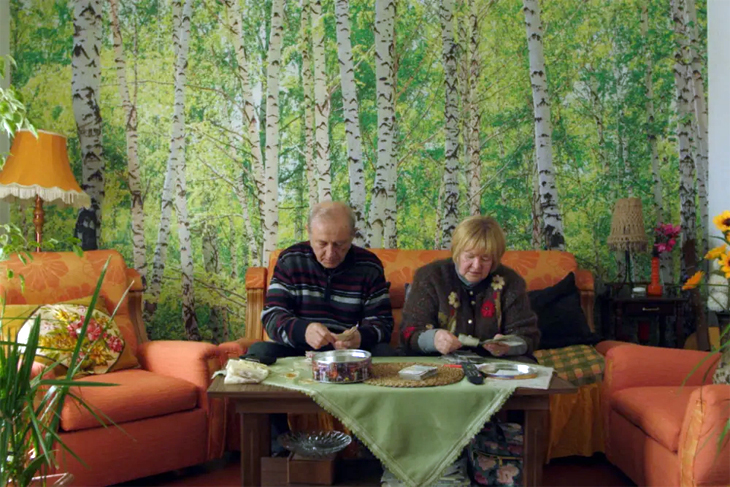
After years of saving money from the small bribes they collect, sixty-year-old Marina and her husband Gosha from Bulgaria are preparing for their dream trip to St. Petersburg to witness the White Nights. But when Russia invades Ukraine and the travel agency vanishes with all their savings, the couple’s dream collapses along with their illusion of control over their moral principles and the relationship they have with each other. Kristina Grozeva and Petar Valchanov, recipients of the 2019 Crystal Globe, return to Karlovy Vary with a tragicomic portrait of a generation forced to reassess its values as they question everything that is considered black and white in post-Soviet society.
Chica Checa
Director: Šimon Holý
Czech Republic, France, Slovak Republic, 2026, 96 min, World premiere
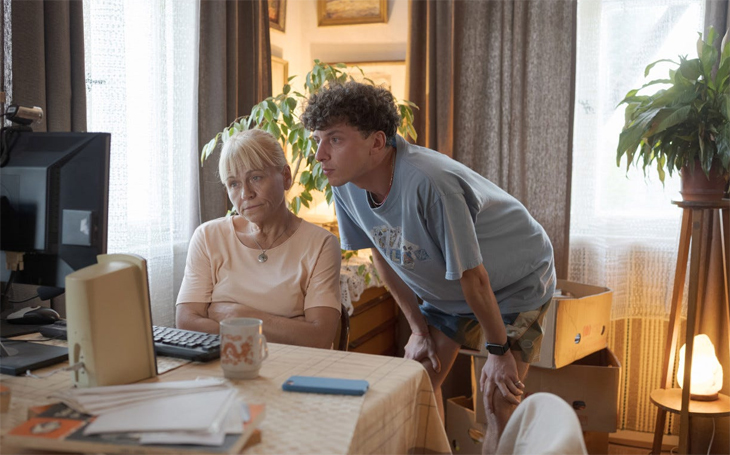
Following a trilogy of low-budget films, two of which (Mirrors in the Dark and And Then There Was Love…) were screened in Karlovy Vary, Šimon Holý returns with the international co-production Chica Checa. Once again, the story revolves around a female protagonist: here, the widowed village mail carrier Zdena (Pavla Tomicová), who tries to fulfill the last wish of her ailing mother. A series of unexpected events brings her closer to her son Lukáš (Jan Cina) and awakens in her a longing for a different life. Holý once again confirms his talent for observation and his ability to create a vibrant portrait of his characters’ inner conflicts, all while giving Tomicová ample space to fully express her acting abilities.
Cinco años, cuatro meses / Five Years, Four Months
Director: Esteban Hoyos García, Juan Miguel Gelacio Ramírez
Colombia, USA, 2025, 83 min, World premiere
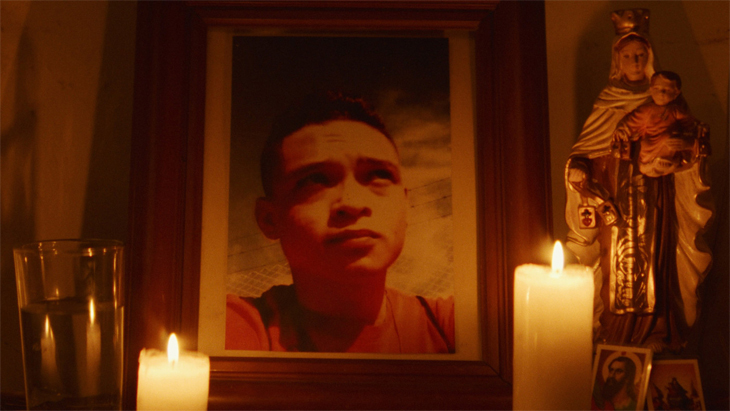
Not only did Martha lose her oldest son, but to this day she doesn’t know what happened to him or his remains. After years of searching in vain, she meets Sandra, who offers her one more possibility, perhaps her last hope: to set out for a remote place where the line between the living and the dead is blurred. The directorial duo of Juan Miguel Gelacio and Esteban Hoyos García gives voice to Colombian women who, after their children’s disappearance, took the search into their own hands. The film’s subdued, focused narrative calls attention to one of the most painful consequences of the country’s longlasting armed conflict while portraying the search for peace and reconciliation in a place that has never witnessed a farewell.
Detrás de la lluvia / Behind the Rain
Director: Valeria Sarmiento
Chile, 2026, 97 min, World premiere
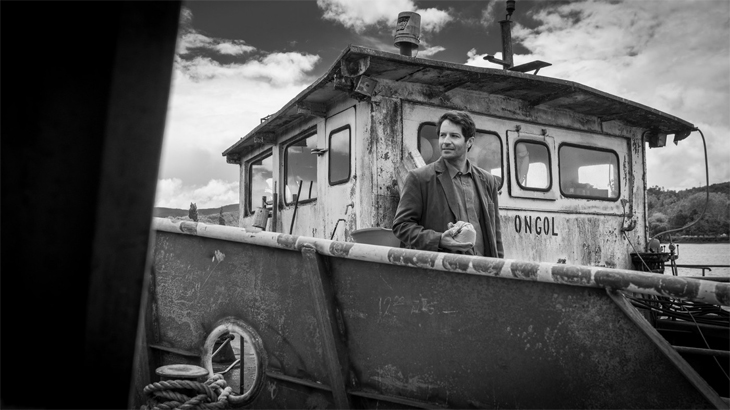
In all her films, director and editor Valeria Sarmiento has questioned the relationship between memory and the unconscious. Is it better to remain silent, hiding secrets so that things do not change (as in Secretos, 2008), or to seek true access to the most painful
memories (as in Huellas, 2023)? In Behind the Rain, Sarmiento reflects on the very concept of repression. Sofía has just finished her psychology studies in Valparaíso (the city where Sarmiento was born) and returns to her hometown, Valdivia. Her return coincides with the discovery of a young girl’s body, which awakens in her memories of childhood sexual abuse. Like a scratched film that looks like rain, Sofía must decide whether to stop the memory from resurfacing or to look beyond the rain, beyond the buried fears of an entire country.
Gæsten / The Guest
Director: Mads Mengel
Denmark, 2026, 99 min, World premiere
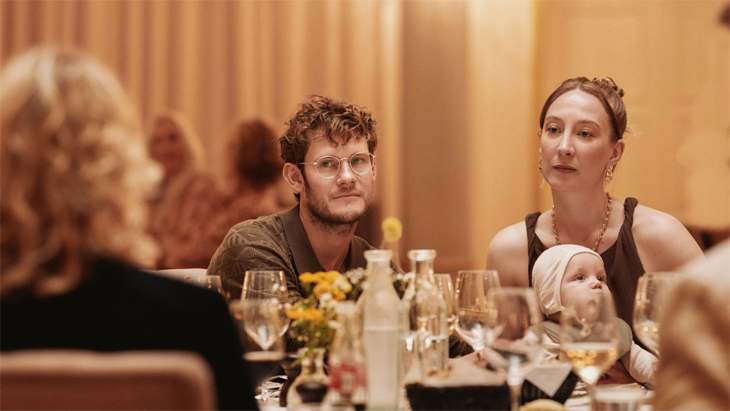
Fresh parents Karl and Emilie are looking forward to a weekend at a seaside hotel, where they plan to announce their child’s name and thus officially welcome him to the world. A day before the celebration, however, Karl’s mother Vibeke shows up, with whom he hasn’t spoken in several years. Building on the tradition of contemporary Nordic cinema, debut filmmaker Mads Mengel tells the intimate story of a family that threatens to fall apart when old wounds are opened up. What begins as a close-knit celebration turns into an uncomfortable confrontation with an unresolved past that won’t let the film’s protagonists forget who they really are – or where they come from
A Happy Family
Director: Jan-Eric Mack
Switzerland, 2026, 120 min, World premiere
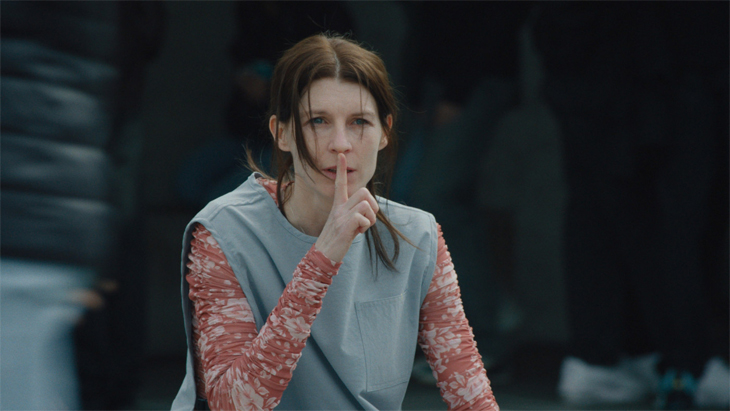
Niki works two jobs, but the little money she earns is barely enough to cover the living expenses for her and her two young children. One day, when the children are left unsupervised, they accidentally set the kitchen on fire, and so the Swiss authorities place them with a foster family on the other side of the country. Though forbidden from contacting her children, Niki decides to track them down. Based on a true story, the first Swiss film to be screened in Karlovy Vary’s Crystal Globe Competition draws its strength from a determined yet ambivalent protagonist whose actions shed light on a rigid social system while reflecting the conflict between parental instinct and personal responsibility. Adding to the film’s strong dramatic arc is an exceptionally compelling performance by Anna Schinz.
Hijamat
Director: Nader Saeivar
Germany, 2026, 103 min, World premiere
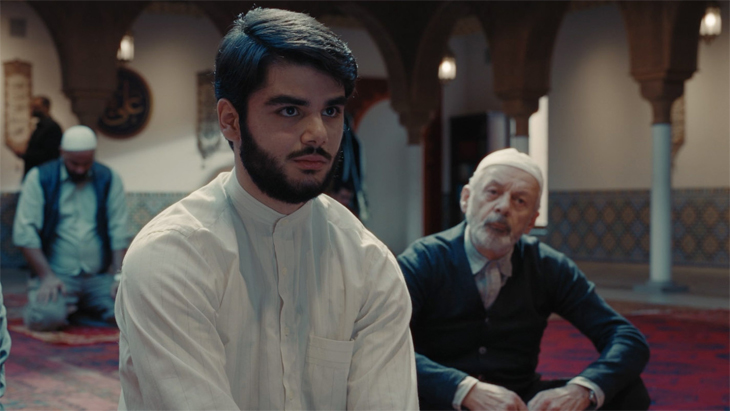
Fifty-year-old Murad’s life is shaken to the core when he learns that his younger brother is gay. Murad would like to support his brother, but their traditional Muslim family is against it. As a result, he finds himself subjected to pressures from all sides – from his father, who has close ties to the local imam, and from his brother’s circle of friends as well. He would like to help everyone, but as he slowly falls into a spiral of conflicts and mounting difficulties, he finds that he, too, is in need of help. Another integral part of this family drama is the theme of migration and dialogue – not just between different religions, but within communities themselves. For his fourth feature film, director Nader Saeivar collaborated with Jafar Panahí, who contributed as producer and editor.
The Lion at My Back
Director: Tonia Mishiali
Cyprus, Luxembourg, Greece, 2026, 106 min, World premiere
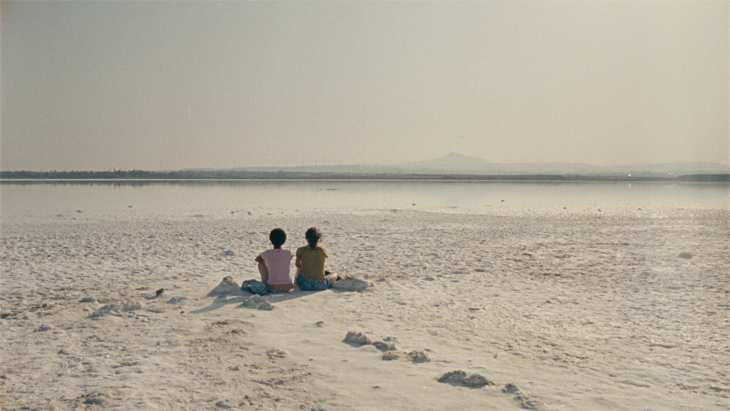
Mariama, an asylum-seeker from Senegal, has just turned eighteen. Stella, at first glance a withdrawn woman in her forties, has recently decided to break free from the clutches of addiction and to give her life a fresh start. In their attempt at finding their place in a world where nothing comes for free, the two women meet and form an unexpectedly strong bond. Following her 2018 debut Pause, Cyprian producer and director Tonia Mishiali returns to Karlovy Vary with a vivid, heartwarming, and hopeful story about how family bonds and motherly love can be found in the most unlikely places.
Pipes
Director: Karim Kassem
Lebanon, 2025, 112 min, World premiere
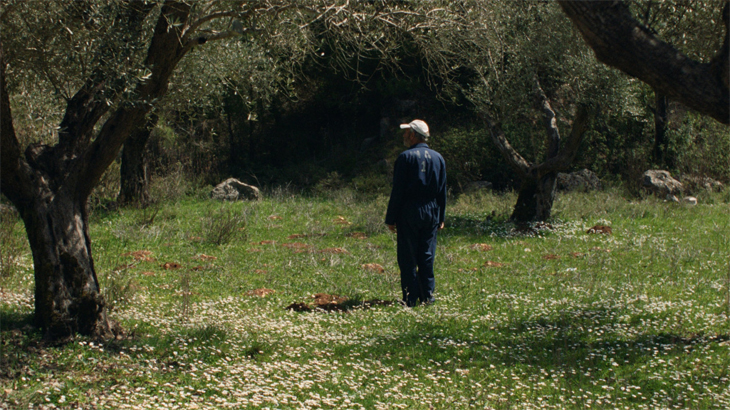
Although Hassan has retired from his job at the water authority, his neighbors are used to him always helping them out. This time, the situation is serious: The entire town is without water, and tensions are rising among the population with every passing day. Hassan would like to help them all, but he also needs time to mourn a friend who recently died under unclear circumstances. Lebanese director Karim Kassem skillfully works with various cinematic genres to create an elegant double portrait of an aging man and the town of which he has been a part all his life. He does so with a sense of nostalgia, subtle humor, and an almost meditative melancholy, mixed with a touch of detective work.
Prameň / Only Beautiful Things to Look At
Director: Ivan Ostrochovský
Slovak Republic, Czech Republic, Hungary, 2026, 90 min, World premiere
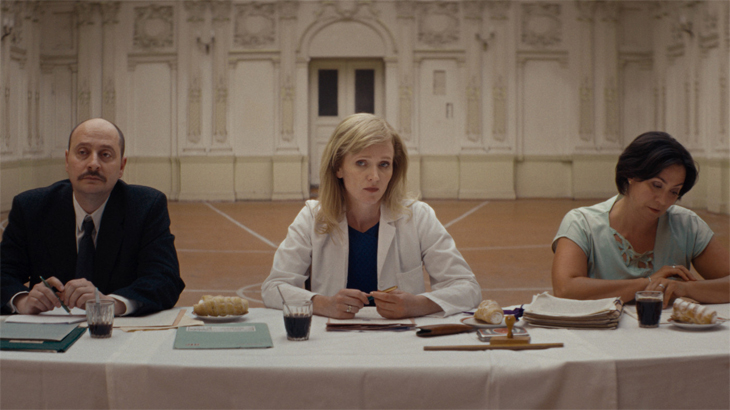
The film is set in the mid-1980s, when the state used its laws to continually influence the most intimate facets of its citizens’ lives. Ingrid (Aňa Geislerová) is an ambitious doctor, whose mission is to bring children into the world, to terminate unwanted pregnancies, and to participate in the sterilisation of Romany women. The melancholy woman has greater misgivings about her private situation than she does about her professional life, that is, until she is caught “off guard” by a new friendship with a charismatic Romany orderly. Spontaneous Agáta presents to Ingrid the human contours of a national minority reduced by the communists to a demographic problem. Ostrochovský’s beguiling drama returns to a hitherto unresolved issue of Czechoslovak history, where the option of having children was determined by the state.
Thit-thee Khu / Fruit Gathering
Director: Aung Phyoe
Myanmar, France, Czech Republic, 2026, 97 min, World premiere
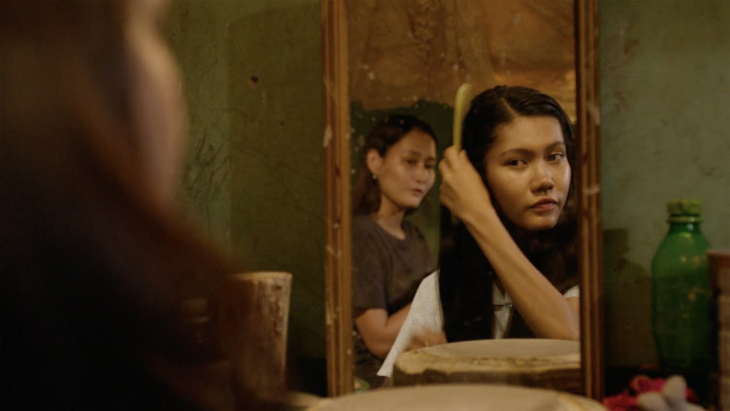
Seen through the eyes of two young women, life in contemporary Myanmar can look quite oppressive. Working at a textile factory in industrial Yangon, they face exhausting work, social repression, and economic uncertainty. Although the grueling pace of everyday life stifles opportunities for human connection, both women continue to dream of intimacy and escape. When they grow closer, they set in motion the previously silenced fibers of their own emotions. Aung Phyoe’s long-anticipated directorial debut unfolds in shades of silence, subtle gestures, and unspoken wishes. In a captivating rhythm that oscillates between tenderness and harshness, the film explores how women’s desires survive in a country where intimacy and love between women remain socially unacceptable.
33 krokov / 33 Steps
Director: Anna Domček, Šimon Domček
Slovak Republic, Czech Republic, 2026, 71 min, World premiere
Thirteen years after Milan Daniel suffered a serious head injury in a racially motivated attack, his assailant is set to be released. What feelings does this moment awaken in a traumatized man who, though he survived, will forever suffer the consequences of that fateful day? Straddling the line between fiction and documentary, the feature debut by Slovak directors Šimon and Anna Domček is an exceptionally cohesive mosaic of fragmentary pieces of everyday life, memories, dreams, and subjective perceptions. Besides exploring the experience of someone seeking to escape the shadows of the past – shadows that weigh heavily on future generations as well – the film also takes an unusual approach to the subject of racial intolerance.
Camionero / Truck Driver
Director: Francisco Marise
Spain, Argentina, 2026, 84 min, World premiere
One would think that every road movie needs its central setting: the road. But Francisco Marise’s hybrid film senses that every trip, road, or journey requires us to stop every now and then. It is just such moments, when the film’s Argentinian truck driver protagonists turn off their engines and stop driving, that form this film’s starting point. Interweaving intimate observations with subtle glimpses of transcendence, Truck Driver paints a collective portrait of people who share a strange dimension of time within the silence of the asphalt wilderness – at motels, on the side of the road, and in tire shops, savoring the pure joy of the present moment while longing for loved ones far away.
Contra la Naturaleza / Against Nature
Director: Axel Bertha
Mexico, 2026, 86 min, World premiere
After many years away, Jonás returns to the countryside to start work as a stonemason. In a place marked by the harshness of life, he opens himself up to something intangible – a force that permeates the landscape, bodies, and time itself. An evocatively told story of a silent man whose enigmatic nature stems from the dark side of humanity and from his contact with the sacred, the film moves along the boundary between the physical and the spiritual. Thanks to compelling sound design, a hypnotic visual style, and a rejection of traditional storytelling, Axel Bertha delivers an absorbing cinematic experience that explores human cruelty as part of a cycle of destruction from which humanity has yet to find a way out.
Enas olokliros anthropos schedon / A Whole Person Almost
Director: Efthimis Kosemund-Sanidis
Greece, Bulgaria, Germany, Cyprus, Romania, 2025, 111 min, World premiere
Ilias arrives on a remote island to claim his late father’s inheritance. But the longer he is forced to stay on the island, the more his initial indifference begins to fade. As he interacts with the local community, he uncovers his father’s past and, with it, a portrait of a man which differs significantly from his own memories. His gradually awakening emotions are intensified by his encounter with the local girl Kalliopi, by sudden spasms in his body, and by mysterious power outages that affect the entire island. This feature-length debut paints a tender picture of a world that is both real and mystical – a place where, despite distant echoes foreboding the possible end of the world, we encounter love, reconciliation, and unexpected understanding.
Homo Sive Natura
Director: Giovanni C. Lorusso
Italy, 2026, 115 min, World premiere
In the remote forests of eastern Cambodia lives a community of indigenous inhabitants. An unnamed forty-year-old businessman arrives with seemingly selfless intentions: he claims he is merely a tourist seeking to discover the life of his “brothers”. In actuality, however, he is gathering information for the possible expropriation of their land. Italian globetrotter Giovanni C. Lorusso lives up to his reputation as a filmmaker balancing on the line between fiction and documentary. Through unique locations, mesmerizing camera work, and immersive sound design, he captures the slow inner transformation of his protagonist along with the rich cultural and spiritual life of a community facing a modern form of colonialism.
The Ink-Stained Hand and the Missing Thumb
Director: Yashasvi Juyal
India, 2026, 120 min, World premiere
If the world had an edge, it might look something like the remote corner of northern India where Santosh and Rajji live, collecting highway tolls in dilapidated booths. Work and endless waiting are blurred together. Bound by the power of love, but also by the need to constantly move around in search of work, they dream of the happiness that awaits them in a new place… until one day, a sudden tragedy turns their lives upside down. As melancholic as it is tender, The Ink-Stained Hand and the Missing Thumb is the story of everyone who has suffered an unexpected loss. It is a heartfelt romance bordering on magical realism, a fleeting memory of a loved one who has vanished into the past, never to return.
Mein Freund der Pornostar / My Friend the Porn Star
Director: Rosa Friedrich
Austria, 2026, 94 min, World premiere
Rosa – the director Rosa Friedrich herself – was never that interested in porn, until her friend Timo expresses a wish to star in an erotic film. So Rosa agrees to help him get his project off the ground. However, the closer it gets to the shooting date, the more Timo feels embarrassed and doubtful about having involved himself in the first place. His face is ultimately replaced with the help of AI, and Rosa, together with a dominatrix, three trans women, a food-porn creator, a sex coach and other protagonists, continues with the film. A playful look at the kind of porn that can be worlds apart from the depersonalised, omnipresent industry, the kind which gives rise to emotions, misgivings and the uniqueness of each, individual body and experience.
Milovník, nie bojovník / Lover, Not a Fighter
Director: Martina Buchelová
Slovak Republic, Czech Republic, 2026, 108 min, World premiere
Andrej wants to stop causing trouble and start behaving himself. To spend the summer helping his grandmother, and mainly not to drink alcohol – because when he drinks, he does things like climb a tree from which he can’t get down anymore. But his plan doesn’t count on him meeting and falling in love (or something) with Míša. And sometimes love is worth fighting for, even if it’s alongside your boring cousin Peter. A summer full of challenges can begin! This debut by Slovak director Martina Buchelová is a celebration of cinematic freedom that is humorous and inventive in terms of both style and narrative. Come enjoy summer like when we were teenagers.
Paris Paris
Director: Isabelle Tollenaere
Belgium, 2026, 78 min, World premiere
An allegory of searching, loss, displacement, and the discovery of new meanings and commonalities. Three men – Yi-En from China, Junior from Congo, and Hamzah from Palestine – share a spartan apartment in a seemingly abandoned building in Paris. Besides this joint living arrangement, the group is bound together by their shared experience of life in exile and the fleeting nature of their possessions, relationships, and sense of home. Director Isabelle Tollenaere’s fiction film debut is set in one of Europe’s great cities and in a replica of Paris built in China – a metaphor for the immigrants’ old dream of life in a new home and its gradual transformation into a new dream about their old home.
Rain Catcher
Director: Michele Fiascaris
Italy, United Kingdom, 2026, 109 min, World premiere
On dark and rainy nights, Miles creeps the streets of London, photographing the city’s hidden corners and the people that populate them. The products of these voyeuristic forays, published under the pseudonym Rain Catcher, earn him great renown on social networks and among high culture. With time, however, he starts to notice the same mysterious woman in his photographs – a woman who follows his every move and slowly begins to threaten all his work and his very existence. Michele Fiascaris’s suggestive feature-film debut uses his film’s gloomy atmosphere to explore the city’s underbelly – and the disquieting human mind. The audience is invited to immerse themselves in Miles’s paranoia as he uncovers reality one step at a time.
Shokyakuro / Incinerator
Director: Shuntaro Uchida
Japan, 2026, 97 min, World premiere
Ten-year-old Kozue, who definitely is not one of the popular kids at school, secretly spends her time tossing various objects into the school’s incinerator. When university student Jinta comes to her classroom and invites the children to a shadow play performance, something awakens inside Kozue, and her path toward adulthood begins. In this poetic tale based on a short story by Japanese author Kaori Ekuni (nicknamed the “female Murakami”), sunny summer days mix languidly with scenes of everyday life to reveal a silent yet unsettling confrontation with a world that often seems impenetrable to children’s eyes. Understanding family relationships, mortality, and one’s own emotions is significantly more complicated than turning things into ash.
Sitni lopovi / Petty Thieves
Director: Mate Ugrin
Croatia, Germany, France, 2026, 106 min, World premiere
It’s summer, and the tourist season on the Adriatic is in full swing. Loner Rio earns extra money as a kitchen help at a local hotel, but he also commits minor thefts at the expense of foreign visitors. When the young Serbian worker Andrea learns about his thieving, the two come to an unusual agreement: they will steal together and share the profits. But this pragmatic alliance grows into an unexpected closeness. Croatian filmmaker Mate Ugrin’s feature debut follows on from several distinctive Balkan films from recent years. Through clever metaphors, subtly elliptical editing, and an evocative use of atmosphere, Petty Thieves paints a portrait of solidarity among people who never stop dreaming of a better future in the face of a tourism industry that pushes them to the margins.
At its 60th edition this year, the Karlovy Vary International Film Festival will present its President’s Award to two distinctive personalities who have significantly shaped contemporary world cinema. In their work, director, screenwriter, and actress Maggie Gyllenhaal and the multifaceted actor, director, screenwriter, and author Jesse Eisenberg transition smoothly between charismatic performances and bold auteur filmmaking.
“Maggie Gyllenhaal and Jesse Eisenberg are distinguished by a certain ‘trans-Atlantic’ sensitivity. Their work as actors and directors has the ability to connect the New World and Europe while drawing on the most essential elements of both traditions. The humor of New York intellectuals is combined with wisdom, talent, and an original way of seeing the world,” says Artistic Director Karel Och.
At the opening ceremony of the 60th Karlovy Vary International Film Festival, the President’s Award will be presented to Golden Globe winner and two-time Academy Award nominee Maggie Gyllenhaal – an actress, director, producer, and screenwriter whose career is full of thought-provoking and groundbreaking work.

At the Karlovy Vary festival, Maggie
Gyllenhaal will present her film The Bride!
(2026), which she wrote, directed and
produced. The film is an imaginative
continuation of the classic Frankenstein
story, influenced by both the 1935 film Bride of Frankenstein and Mary Shelley’s original masterpiece. With Warner Brothers at the helm, the film stars Jessie Buckley, Christian Bale, Annette Bening, Penélope Cruz, Peter Sarsgaard and Jake Gyllenhaal.
Previously, Gyllenhaal made her feature
directorial debut with her adaptation of
Elena Ferrante’s novel The Lost Daughter,
starring Olivia Colman, Dakota Johnson,
and Jessie Buckley, for which she also
wrote the screenplay. The film went on to
be nominated for three Academy Awards
for Best Actress (Colman), Best Supporting
Actress (Buckley) and Best Adapted
Screenplay (Gyllenhaal).
Photo credit © Gareth Cattermole/Contour by Getty Images
The film also won Gyllenhaal three Independent Spirit Awards (Best Feature, Best Director and Best Screenplay); four Gotham Awards (Best Feature, Bingham Ray Breakthrough Director Award, Best Screenplay, Outstanding Lead Performance for Colman); The Venice Film Festival’s “Golden Osella” Award for Best Screenplay; a Directors Guild of America Award for Outstanding Directorial Achievement in First-Time Feature Film; and a New York Film Critics Circle Award for Best First Film among many other wins and nominations. She was also named one of 2022’s Directors to Watch by both Variety and the Palm Springs International Film Festival.
Gyllenhaal won acclaim in 2002 for Secretary, starring opposite James Spader, for which she won a National Board of Review award and both Golden Globe and Independent Spirit Award nominations. She followed with Laurie Collyer’s Sherrybaby (2006), a painful look at a young woman getting out of prison and hoping to reclaim her child, which earned her a second Golden Globe nomination. Sherrybaby won the Crystal Globe for Best Film at the 2006 Karlovy Vary IFF, while the Best Actress Award was awarded to Maggie Gyllenhaal. In 2009, she starred opposite Jeff Bridges in Crazy Heart, earning her an Oscar nomination. Other notable film performances include Donnie Darko (2001), Mona Lisa Smile (2003), Stranger Than Fiction (2006), The Dark Knight (2008), Nanny McPhee Returns (2010), Frank (2014) and The Kindergarten Teacher (2018) among many others. Gyllenhaal moved into television with BBC/Sundance’s The Honourable Woman (2014), for which she won a Golden Globe Award and received SAG and Emmy nominations. And in 2019, Gyllenhaal concluded her three-season run as the sex worker Candy who becomes a film director in the HBO drama The Deuce, which she also produced. Her performance earned her rave reviews, and both Golden Globe and Critics Choice Award nominations.
She’s equally at home on stage. She played Priscilla in Tony Kushner’s Homebody/Kabul (2004) in both Los Angeles and at BAM (Brooklyn Academy of Music). She also starred as Yelena in Uncle Vanya (2009) and Masha in The Three Sisters (2011), both alongside her husband Peter Sarsgaard at the Classic Stage Company in New York City. She debuted on Broadway in Sam Gold’s revival of Tom Stoppard’s The Real Thing opposite Ewan McGregor in 2014. She also collaborated with artist Matthew Barney on the experimental film River of Fundament in 2014, and her readings of Tolstoy’s Anna Karenina and Sylvia Plath’s The Bell Jar can be heard on Audible.
At the 60th edition of the Karlovy Vary International Film Festival, the President’s Award will be presented to actor, screenwriter, director, and producer Jesse Eisenberg, a two-time Oscar nominee and the recipient of numerous prestigious film awards.

Jesse Eisenberg is one of the most multifaceted figures in contemporary cinema. His first role was in the 2002 film Roger Dodger, which earned him an award for most promising young actor at the San Diego film festival. His performance in Noah Baumbach’s family drama The Squid and the Whale (2005) earned him nominations for the Independent Spirit Award and the Critics’ Choice Award. The apocalyptic horror comedy Zombieland (2009) was a box office hit; it was followed by the sequel Zombieland: Double Tap in 2019.
In 2010, Eisenberg played Mark Zuckerberg in The Social Network, which earned him his first nominations for an Oscar, a Golden Globe, and a BAFTA Award. There followed Woody Allen’s comedy To Rome with Love (2012), and four years later he again worked with the legendary director on Café Society (2016).
In 2013, he appeared in the thriller Now You See Me and played a double role in The Double (2013), based on the story by Fyodor Dostoevsky. Most recently, Eisenberg starred in the blockbusters, Now You See Me: Now You Don’t (2025) and the new Minions film, Minions and Monsters (2026).
As a filmmaker, Eisenberg made his screenwriting and directing debut with the feature film When You Finish Saving the World, starring Julianne Moore and Finn Wolfhard as a mother and son trying to navigate their relationship. The film had its premiere at the Sundance and Cannes Film Festivals. Eisenberg subsequently aroused great attention with his second film, A Real Pain (2024), in which he and Kieran Culkin play cousins in search of their heritage. Eisenberg was nominated for an Oscar and a Golden Globe for Best Screenplay, and his screenplay won a BAFTA Award, the Waldo Salt Award at the Sundance Film Festival, an Independent Spirit Award, and numerous other prizes. He was also nominated for a Golden Globe for Best Actor, and Kieran Culkin’s performance garnered an Oscar for Best Supporting Actor.
His upcoming film as a writer/director, The Debut, stars Julianne Moore and Paul Giamatti. Eisenberg co-stars and wrote the music and lyrics for the film’s musical-within-the-movie. It will be released in Fall 2026 by A24. As a playwright, Eisenberg has had five plays produced in either New York or on London’s West End. His first play, Asuncion premiered in 2011, and he appeared in the play’s production at the Cherry Lane Theatre. The Revisionist, starring Vanessa Redgrave, had its premiere at the same theater in 2013. The dark comedy The Spoils ran in New York and London’s West End. Happy Talk, with Susan Sarandon and Marin Ireland, premiered in 2019, and in 2025 Eisenberg performed his one-man show, The Ziegfeld Files. Eisenberg has been a frequent contributor to The New Yorker magazine, is the author of Bream Gives Me Hiccups (Grove Press) and When You Finish Saving the World (Audible), which won the 2021 Audie Award for Best Original Work.
Outside his artistic work, Eisenberg is a non-directed kidney donor and a Polish citizen. In honor of Jesse Eisenberg, the Karlovy Vary festival will screen The Double, directed by Richard Ayoade, in which Eisenberg plays the lead role.
X




Stay connected with HENNESY.cc
Since 2002 © HENNESY.cc Premium Entertainment – Alle Rechte vorbehalten