






X
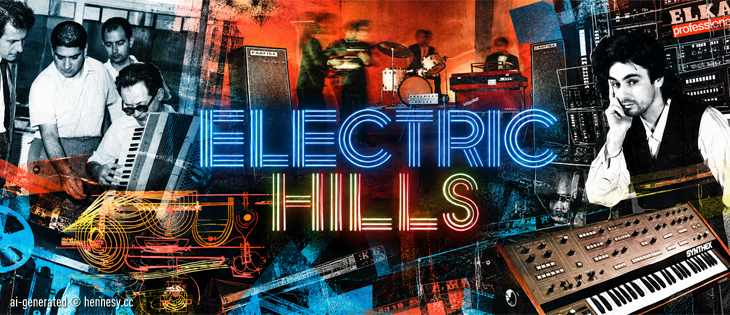
The Museo del Synth Marchigiano and The Blink Fish launch a crowdfunding campaign to complete Electric Hills, a documentary tracing the evolution of the craft and manufacturing tradition in Italy’s Marche region and its lasting impact on the sound of electronic music worldwide.
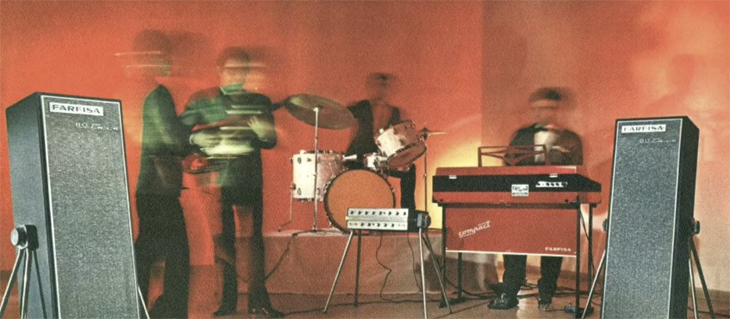
Produced by The Blink Fish, Electric Hills tells an overlooked story: how a region far from Italy’s traditional cultural centres became a fertile ground for electronic innovation, producing instruments that would go on to shape music across the world.
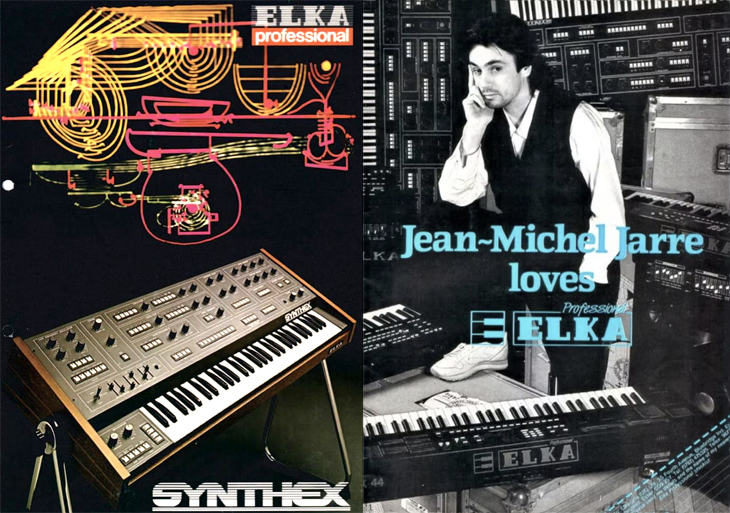
Among rolling hills, farmland and family-run workshops, traditional craftsmanship met emerging electronic technology. The result was a network of laboratories and manufacturers whose instruments found their way into recording studios and onto stages around the globe — from Pink Floyd and Jean-Michel Jarre to Kraftwerk and Tangerine Dream, and eventually into the hands of the composers behind the Stranger Things soundtrack.
The film has already been fully shot. The remaining work is post-production.
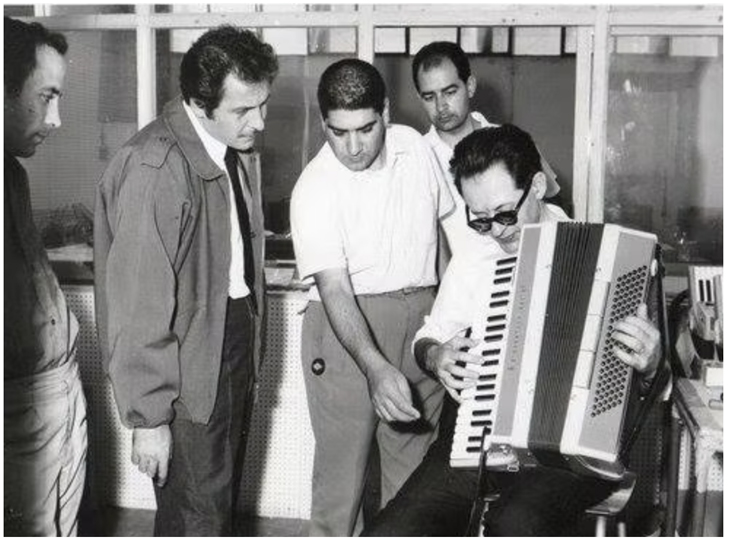
The story begins with the accordion makers of Castelfidardo and moves through the electric organs of the 1960s, the first Italian synthesizers and the pioneering drum machines that anticipated developments later associated with Japan.
For the first time, Electric Hills brings together the history of this remarkable industrial district, home to companies including Farfisa and Elka, alongside a wider network of manufacturers, engineers and craftspeople working within a relatively small geographical area.
The documentary combines previously unseen interviews, archival footage and material, and a collection of rare and largely forgotten instruments.
Fatar, Eko, FBT, Sisme, Viscount and Crumar are also featured in the project and are supporting the film as sponsors.
The documentary brings together an international group of musicians, composers, producers, inventors and designers.
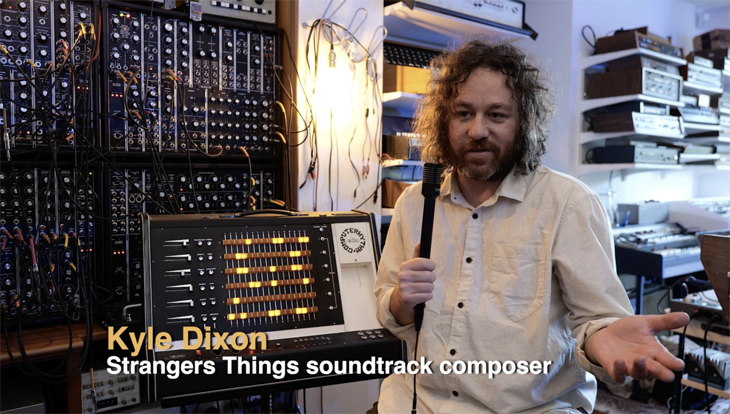
Among them are French electronic music pioneer Jean-Michel Jarre and American composers Kyle Dixon and Michael Stein, best known for their work on the Stranger Things soundtrack.
They are joined by Boosta of Subsonica, Claudio Simonetti of Goblin, Tommaso Colliva, Massimo Martellotta and Enrico Gabrielli of Calibro 35, German composer and experimental musician Hainbach, British artist Sam Battle, known as Look Mum No Computer, American artists Martin Schmidt and Andrew Daniel of Matmos, and French musician Fabrice Quagliotti of Rockets.
The film also features Italian and international inventors, engineers, designers and technicians whose work helped turn the region into an unlikely centre of electronic instrument production.
Dixon & Stein, Hainbach, Look Mum No Computer and Boosta have all visited the Museo del Synth Marchigiano, where they performed and recorded using instruments from the collection.
They are part of a much longer line of electronic and experimental musicians who have travelled to the hills of the Marche not simply to visit the museum, but to record, experiment and work with instruments that are increasingly difficult to find elsewhere.
Electric Hills grew directly out of the Museo del Synth Marchigiano itself.
Founded by a group of friends, musicians and collectors, the museum has spent years recovering, restoring and bringing back to life rare electronic instruments manufactured in the Marche: synthesizers, organs and drum machines that have played a role in decades of pop, rock and electronic music.
The founders describe the museum as an attempt to address „a great absence in the face of a great presence“: on one hand, the limited recognition of a crucial chapter in the industrial and cultural history of the Marche; on the other, the recurring presence of instruments from the region in the records, photographs and videos of some of the most influential musicians in the world.
As the museum began attracting musicians, composers and researchers from across the international scene, the need to document this largely untold history became increasingly clear.
The film is the natural extension of that work.
Electric Hills challenges the conventional divide between cultural centres and the periphery.
Here, the province is not presented as a place catching up with the rest of the world, but as a place where innovation was already taking place.
Between wheat fields, workshops and small family-run factories, the film reveals the outlines of an early musical Silicon Valley — a story with consequences far beyond the Marche, and one that reaches anyone who has listened to electronic music over the past six decades.
Rural landscapes and futuristic technology coexist with archival material and contemporary interviews, brought together through an editing style influenced by the visual language of music videos.
There is no nostalgia at the heart of Electric Hills. Instead, the documentary looks at a living legacy — one that continues to resonate across music, design and technology.
Development, pre-production and filming have already been completed. The project is now seeking support for the final stage of production.
The remaining work includes editing, licensing archival images and footage, producing the original soundtrack, sound design and mixing, colour grading, mastering and the creation of festival versions.
The Museo del Synth Marchigiano has launched the crowdfunding campaign on a „keep it all“ basis: every contribution goes directly towards the completion of the film, which will be completed regardless of the final amount raised.
The rewards draw directly from the museum’s archive and collection. They include original photographic prints, paper designs and vintage lithographic films from the Bontempi and Farfisa archives, a rare IRIS/Bontempi integrated circuit, a signed film poster and a licence for a software plug-in from the Apesoft catalogue.
For those looking to become more closely involved with the project, the Studio Experience offers two days of recording at the museum, using rare instruments from the collection.
The screenplay was written by the Museo del Synth Marchigiano team and Paolo Bragaglia, composer, performer and founder of the museum.
The film is directed by Marco Bragaglia, a filmmaker and visual artist with more than three decades of experience across cinema and the visual arts.
Electric Hills is produced by The Blink Fish, an independent production company with a focus on visually distinctive and narratively driven projects.
The crowdfunding campaign, rewards and further information are available here.
X

Stay connected with HENNESY.cc
Since 2002 © HENNESY.cc Premium Entertainment – Alle Rechte vorbehalten